
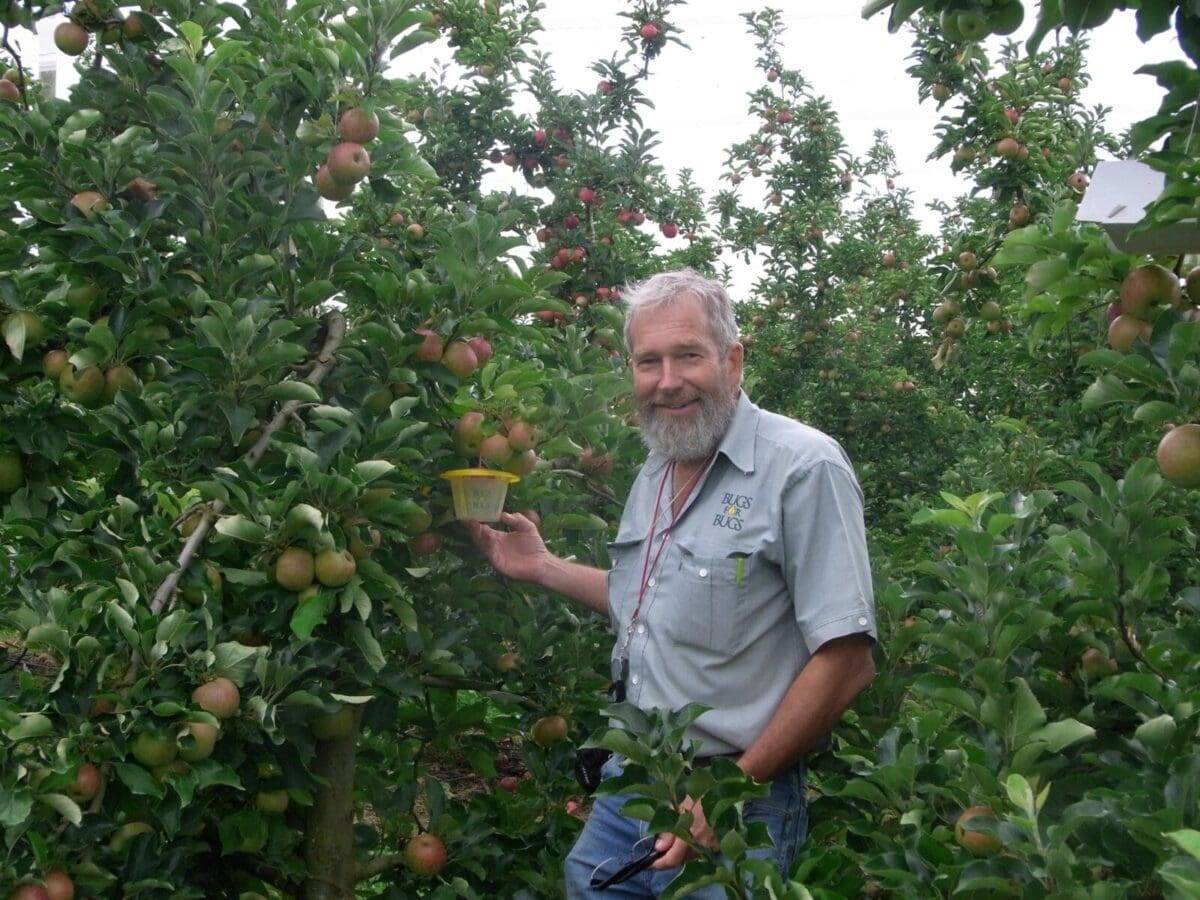
Bugs for Bugs is featured in this recent episode of ABC Landline titled ‘Bug Wars’, which shines a spotlight on the critical role of Integrated Pest Management (IPM) in modern Australian agriculture. In this segment, our founder and director, Dan Papacek, takes viewers behind the scenes of our Toowoomba facility to offer insight into how we mass-rear millions of beneficial insects and mites every week.
The report highlights the growing shift away from reliance on pesticides toward IPM with emphasis on biological control as a critical component. It showcases how we work alongside growers, to implement sustainable strategies in which ‘good bugs’ (such as our predatory mites and parasitoid wasps) combat major pests like thrips. As Dan explains, this isn’t just about saving crops – it’s about revolutionising farming practices to ensure a cleaner, safer, and more sustainable future for Australia’s food production.
Full transript
Pip Courtney: “They’re so incredibly tiny. How did you ever find them?”
Dan Papacek: “Yeah, they are amazing. I think that’s one of the things that people don’t realise—that things they can’t even see are doing such a powerful job to help manage pests out there in the field.”
Pip Courtney: “Integrated pest management isn’t new. The idea was introduced in the late 1990s, but it’s gained traction in the past 10 to 15 years. Melina Miles is an entomologist working for the Queensland Department of Primary Industries.” This is what the team here call reverse farming. They are growing crops to have them intentionally attacked by bugs. And it’s a really delicate balance to keep the plants alive while introducing so many pests.” And what about staff? Because I know every time we open a door, there’s somebody on the inside. How many staff do you have?” Dan Papacek: “About 45 all up, and we’ve got three locations throughout Southeast Queensland.”
Dan Papacek: “So Savvy here is just separating lacewing eggs from inside these cylinders. And they’re incredibly delicate. So it might look simple, but it’s quite a technique she’s developed to make sure she doesn’t damage them.” Paul Inderbitzin: “You’ll never get complete control of it, but it’s just adding a few more beneficials into the system to level the playing field a little bit so that we don’t end up with paddocks that are just full of mites that are just essentially sucking the juice out of the leaf.”
Paul Inderbitzin: “You’ll never get complete control of it, but it’s just adding a few more beneficials into the system to level the playing field a little bit so that we don’t end up with paddocks that are just full of mites that are just essentially sucking the juice out of the leaf.”
Pip Courtney: “The bugs used are often minuscule but with a mighty job. Dan spends his days looking through magnifying glasses and microscopes.” Dan Papacek: “These are California mites here. They’re part of a group of predatory mites that are really important in biological control.”
Dan Papacek: “I always like to go to great lengths to point out that the sort of biocontrol work that we do, it really has nothing to do with the cane toad. The cane toad was a very poor decision… but the invertebrate organisms that we work with are highly specialised.” Pip Courtney: “And what’s your Moby Dick? That one bug that you can’t quite conquer but you really want to?” Dan Papacek: “Oh, it’s probably quite a list, but if I had to choose one, I’d probably say something like green vegetable bug and some of its close allies out there.”
Dan Papacek
Meet the expert
Dan Papacek is the entomologist and founder behind Bugs for Bugs. Since 1981, he has led the Australian charge in biological control, helping farmers replace chemical pesticides with beneficial insects. He was awarded the Peter Kenny Medal in 2016 for his contribution to sustainable agriculture.
What is IPM?
Integrated Pest Management (IPM) is a comprehensive strategy for commercial agriculture that places biological and cultural control methods at the forefront, reserving chemical interventions strictly as a measure of last resort.
Discover how Bugs for Bugs have pioneered this sustainable approach in Australia since 1981.