
Dahlias and spider mites
Spider mites are common pests of Dahlias. Chemical control of spider mites is challenging. The few miticides available are often ineffective and many cause harm to our beneficial insects and mites. Spider mites are quick to develop resistance to pesticides and this further compounds the problem. You should avoid using toxic chemical sprays in your home garden if at all possible.

We have two species of predatory mites that can help with the management of spider mites in Dahlias.
- Californicus are a generalist predator that are best introduced proactively as a preventative measure. If you establish Californicus mites early in the life your your Dahlia plantings you should be able to keep them spider mite free. If however you do get outbreaks of spider mites, that is the time to bring in the heavyweight performer – Persimilis.
- Persimilis mites are dedicated spider mite predators and can do a great job but they are a little more fussy with their environmental requirements and will only survive while spider mites are present. Persimilis are also significantly more expensive because the demands for mass rearing are much greater.
We recommend early preventative releases of Californicus. Monitor your plants closely, if spider mites appear, that is the time to consider a curative application of Persimilis.
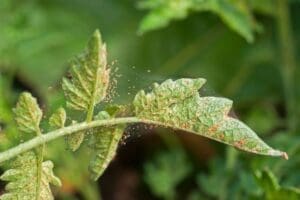
Stippling on leaves, visible mites and webbing can all be indicators of spider mite activity.
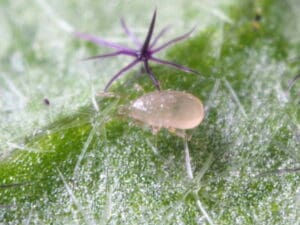
Californicus are used early and preventatively
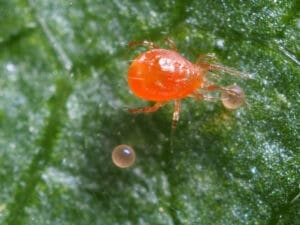
Persimilis are used curatively to solve a problem infestation