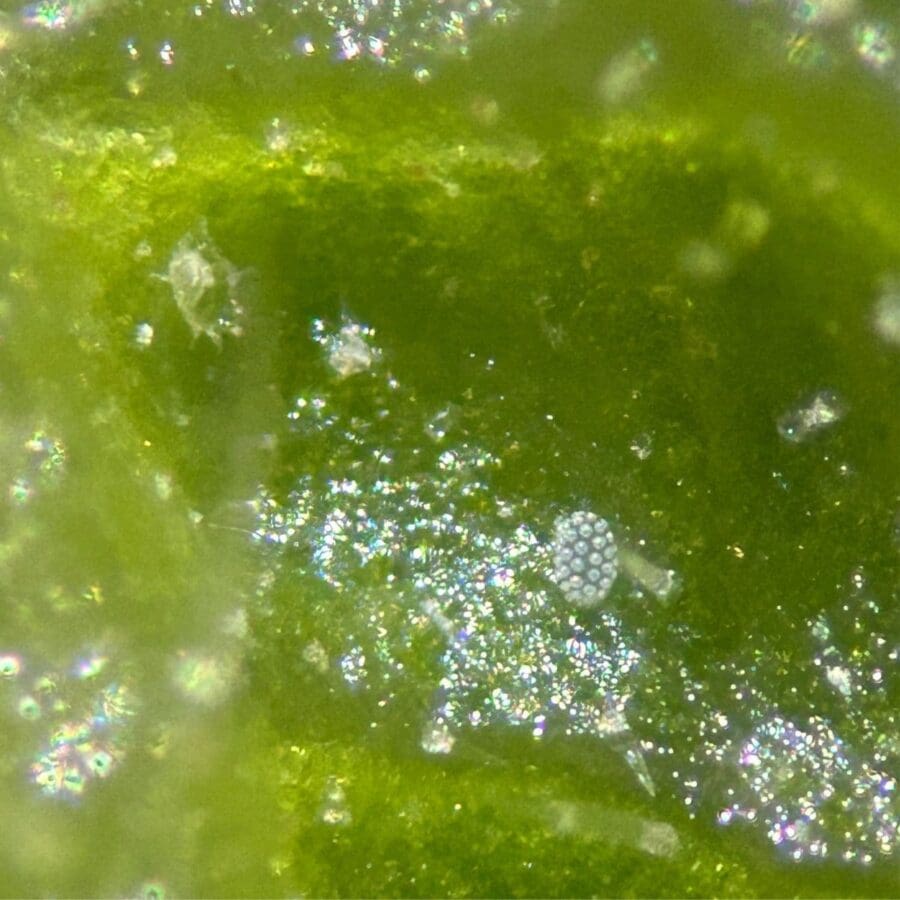
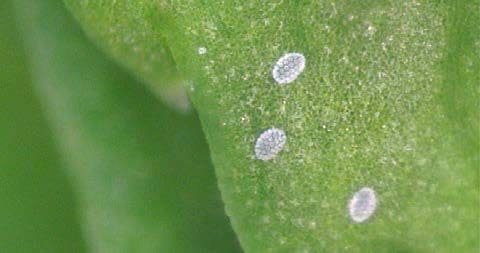
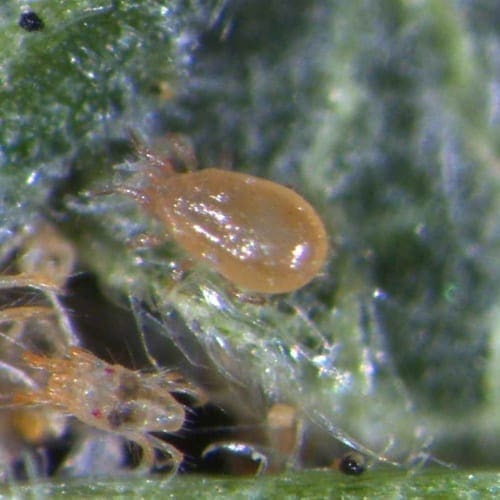
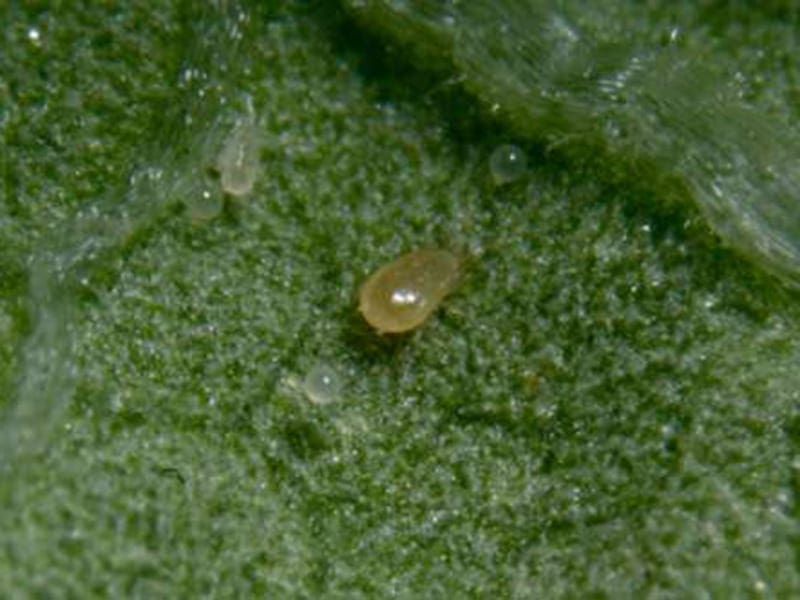
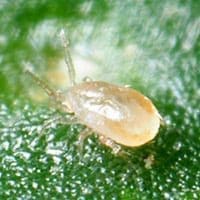
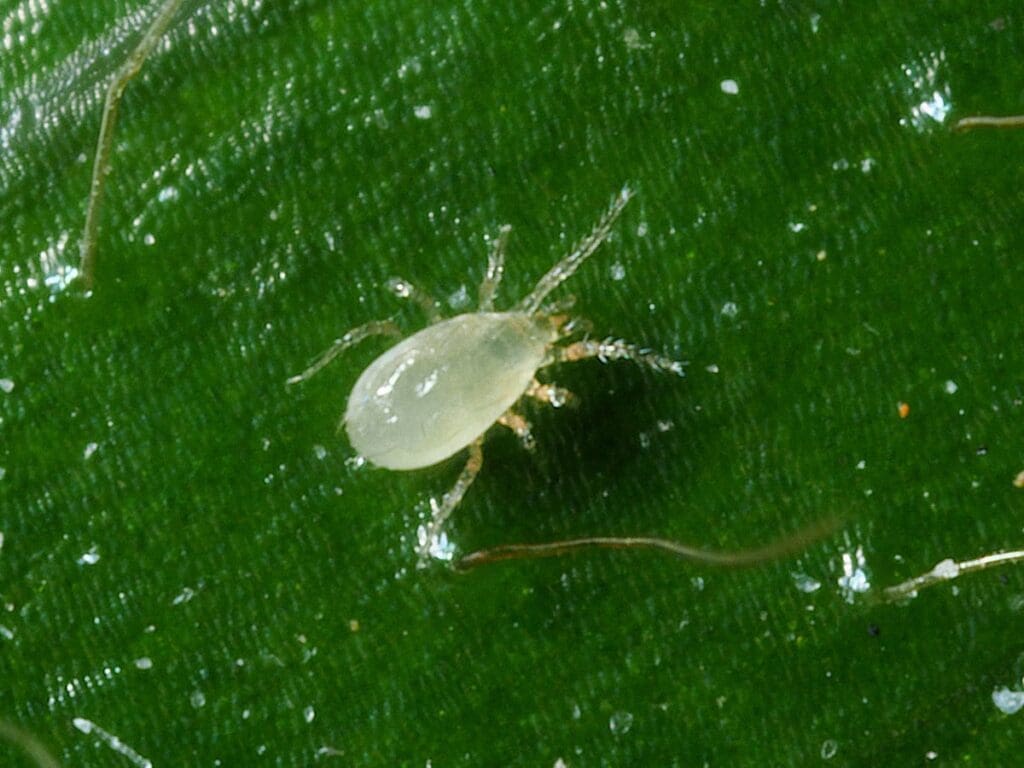
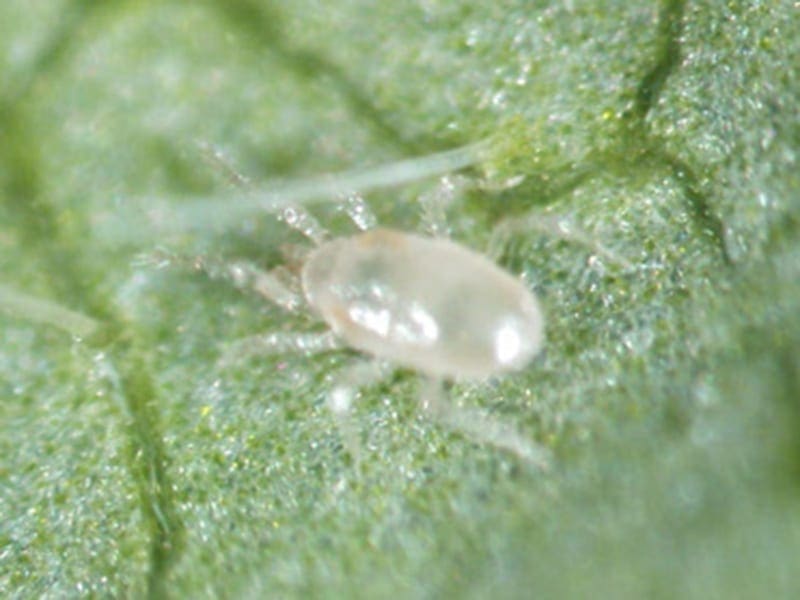
Broad mites are troublesome pests of a wide range of plants including capsicum, chillies, eggplant, cucumber, dahlia and other flowering and ornamental plants. They infest young shoots and growing tips causing leaf curl, stunting and distorted leaves. Fresh growth can become leathery and necrotic, seriously affecting plant development. The time for broad mites to complete their life cycle can be well less than a week under favourable conditions. They are able to breed very rapidly.
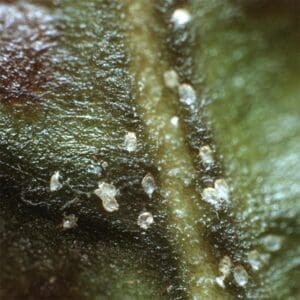
Broad mites are microscopic making them difficult to diagnose. Access to a good quality hand lens or microscope is essential if you wish to confirm the presence and extent of a broad mite infestation.
Warm temperatures and high humidity environments favour broad mite. These are reasons why broad mite is a common pest in greenhouse and hydroponic production systems.
Chemical control of broad mites has never been easy and is becoming even less so. This is due to a lack of effective chemistry, the capacity for broad mites to develop resistance and the challenge of achieving satisfactory coverage with this microscopic and cryptic pest that gets into all the ‘hard to access’ parts of a plant. Most of the chemicals that have been used for broad mite management are toxic to beneficial insects and mites.
Biological control of broad mites
Biocontrol of broad mites is not easy. Three species of commercially available predatory mites can help reduce the incidence and severity of broad mite attack. Their performance varies with host plant, environmental conditions and other factors that we do not fully understand. It may take some experimentation to work out what combination of predatory mite species, timing for release and numbers may work for you. The predatory mites that may assist with your broad mite management are listed below. Both loose material and sachet (slow release) options can be considered.
We are always keen to hear back with your experience with broad mite management as each situation is unique and we continue to learn of strategies to minimise the damage caused by broad mites.